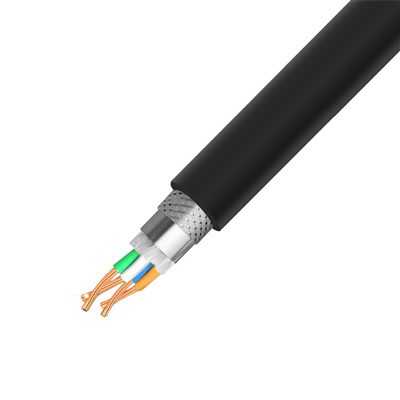
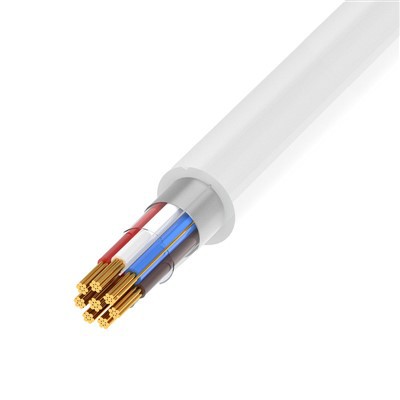
In today's digital age, network connectivity has become a fundamental necessity for individuals, businesses, and even society. Despite the growing popularity of wireless technologies like Wi-Fi, network cables (particularly Ethernet cables) maintain their irreplaceable position in critical scenarios due to their unique advantages.
First, stability and reliability are the most significant advantages of network cables. Compared to wireless signals, which are susceptible to interference (such as obstructions from walls, interference from other electronic devices, or weather), network cables transmit data through physical media, virtually unaffected by external environmental interference, providing a more stable connection. For applications requiring high bandwidth and low latency (such as online gaming, video conferencing, or industrial automation), the stability of network cables directly impacts user experience and business efficiency.
Second, transmission speed and bandwidth offer significant advantages. Currently, mainstream Gigabit Ethernet (Cat5e/Cat6) and 10 Gigabit Ethernet (Cat6a/Cat7) cables can easily achieve transmission rates of 1Gbps to 10Gbps with extremely low latency (typically less than 1 millisecond). In contrast, the speed and latency of wireless networks are limited by protocol standards (for example, Wi-Fi 6 has a theoretical upper limit of approximately 9.6 Gbps, but actual performance often drops significantly due to interference). For scenarios with stringent data throughput requirements, such as data centers and financial institutions, network cables remain the preferred choice.
Security is another major advantage of network cables. While wireless signals can be maliciously intercepted or attacked, data transmitted via network cables is physically isolated, making eavesdropping extremely difficult. This makes them particularly suitable for sensitive sectors such as government and healthcare. Furthermore, network cables offer greater cost-effectiveness in the long term. While initial cabling costs are higher, they have a long lifespan (up to 10 years or more), are easy to maintain, and require no frequent equipment upgrades.
In summary, despite the continuous advancement of wireless technology, network cables remain the core infrastructure for building high-performance networks due to their stability, high speed, security, and long-term cost advantages. In the future, as technology evolves (such as the convergence of fiber optic cables and network cables), network cables will continue to play a key role in digital transformation.